

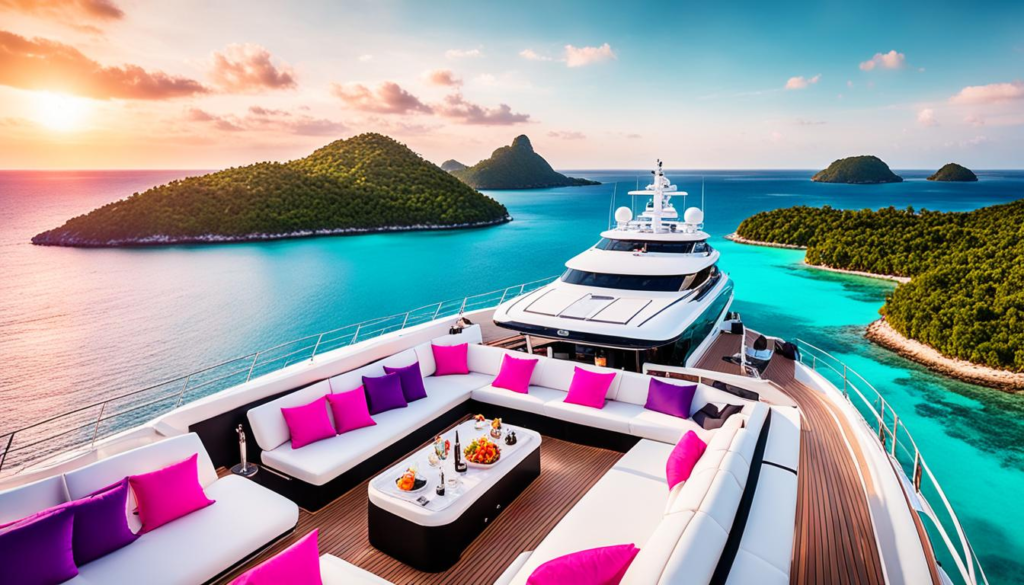
Billionaires are redefining luxury by abandoning material excess in favor of immersive experiences that transform perception, identity, and legacy. From off-grid scientific expeditions to neural immersion retreats and private cultural simulations, elite individuals are chasing depth, meaning, and access. This article reveals seven immersive experiences billionaires are obsessed with this year—and why the third is unlike anything most people imagine exists.
Introduction: Why Billionaires Are Quietly Walking Away From Traditional Luxury
For decades, luxury was obvious. Bigger yachts. Longer jets. More square footage. But at the highest levels of wealth, something strange has happened: luxury stopped feeling luxurious.
When everyone in your circle owns similar things, possessions lose their signaling power. A supercar no longer impresses. A penthouse no longer differentiates. And even first-class travel starts to feel routine.
According to the Knight Frank Wealth Report, more than 68% of ultra-high-net-worth individuals now prioritize immersive, transformational experiences over physical assets. McKinsey data supports this shift, showing experiential luxury as the fastest-growing category among the global elite.
Today’s billionaires don’t want more things.
They want experiences that change how they think, feel, and see the world.
Below are seven immersive experiences billionaires are actively obsessed with this year—many of which operate completely outside public awareness.
And yes—#3 is real, operational, and deeply unsettling to most people who hear about it.

1. Off-Grid Scientific Expeditions to the Most Extreme Places on Earth
What happens when billionaires want perspective—not pleasure?
They disappear.
A growing number of billionaires are booking private, off-grid expeditions to extreme environments such as Antarctica, Arctic ice shelves, deep Amazon rainforests, and remote African deserts. These are not luxury safaris or adventure tours.
They are deep immersion reality resets.
Participants travel with:
- Climate scientists
- Evolutionary biologists
- Former astronauts
- Indigenous survival experts
There is no Wi-Fi. No assistants. No press. For weeks, participants live under survival-based routines while engaging in daily scientific, philosophical, and existential discussions.
Bloomberg reports that these expeditions are increasingly popular among tech founders and hedge-fund principals seeking what they call “cognitive humility”—a forced reminder of scale, fragility, and time.
For many, it becomes a turning point in how they view risk, leadership, and legacy.
2. Fully Immersive Cultural Simulations of Lost Civilizations
Can you live history instead of studying it?
Billionaires are doing exactly that.
Private cultural institutions—primarily in Europe and the Middle East—are hosting full-scale, invitation-only simulations of ancient civilizations. These experiences are limited to small groups and operate for only a few weeks per year.
Examples include:
- Living inside a reconstructed Roman villa economy, complete with social hierarchies and governance
- Participating in a Medici-era Florentine court simulation, including art patronage and political maneuvering
- Experiencing pre-colonial Polynesian navigation, leadership rituals, and survival systems
Participants don’t observe.
They fully inhabit the system.
According to UBS Wealth Insights, ultra-wealthy individuals increasingly seek historical immersion to better understand power cycles, societal collapse, and leadership under constraint—lessons modern business environments rarely teach.
3. Neural Immersion Retreats That Rewire Perception (Yes, This Actually Exists)
This is the experience that shocks nearly everyone.
A small but growing number of billionaires are attending private neural immersion retreats—medically supervised environments designed to recalibrate perception, attention, and emotional regulation.
These retreats combine:
- Advanced EEG and biometric mapping
- Multi-day sensory deprivation
- Controlled re-stimulation protocols
- AI-driven biofeedback loops
The goal is not relaxation.
It’s mental performance recalibration.
According to experts cited in MIT Technology Review, these environments are designed to train how the brain processes stress, time, and decision-making—not as therapy, but as experiential optimization.
Access is tightly controlled. Locations are undisclosed. Participants sign extensive confidentiality agreements.
Most millionaires never even hear about these programs.
4. Temporary Sovereignty Over Pristine Natural Environments
Why own land when you can control it—temporarily?
Instead of purchasing private islands or estates, billionaires are increasingly securing exclusive, time-bound control over protected natural environments.
These experiences may include:
- Sole access to conservation areas
- Participation in wildlife management
- Hosting private gatherings in untouched ecosystems
The World Economic Forum has identified this trend as part of “stewardship luxury,” where status comes from preservation rather than ownership.
Participants often describe these experiences as deeply grounding—offering a sense of responsibility that traditional luxury lacks.
5. Hyper-Private Creative Residencies With World-Class Minds
Why are billionaires paying millions to think quietly?
Because creativity has become the ultimate leverage skill.
Private creative residencies—often hosted in remote locations—bring together:
- Nobel-level scientists
- Renowned artists
- Philosophers and futurists
- Former heads of state
There is no agenda.
No output requirement.
No media presence.
Days are structured around long conversations, silent work, and collaborative thought experiments.
As one hedge-fund founder told the Financial Times:
“Everywhere else, I’m performing. Here, I’m thinking.”
6. Elite Sporting Immersions That Go Beyond VIP Seats
Billionaires aren’t just watching sports anymore.
They’re stepping inside the system.
Examples include:
- Training with Olympic-level coaches
- Participating in Formula 1 engineering briefings
- Learning biomechanics and strategy from elite athletes
According to Deloitte Sports Insights, immersive sports access is one of the fastest-growing experiential categories among ultra-high-net-worth individuals.
These experiences provide challenge, humility, and embodied learning—qualities often missing from elite lifestyles.
7. Private Legacy & Identity Design Labs for Families
What happens when wealth outlives meaning?
Some billionaires are commissioning legacy immersion labs—multi-week experiences designed to align family identity, values, and long-term purpose.
These labs often include:
- Multi-generation storytelling reconstruction
- Psychological and values mapping
- Shared physical and cognitive challenges
- Narrative-building exercises
The goal is not therapy.
It’s intentional identity design.
As generational wealth transfer accelerates, these experiences are becoming surprisingly common.
The Deeper Pattern: Why Immersion Has Replaced Possession
Across all seven experiences, one insight stands out:
Possessions impress others.
Experiences transform the self.
According to PwC Global Consumer Insights, experiential value delivers higher long-term satisfaction than material luxury—especially among the ultra-wealthy.
Billionaires are no longer chasing visibility.
They’re chasing depth, scarcity, and personal transformation.
What This Means for Everyone Else
You don’t need billions to learn from this shift.
The core lesson is universal:
- Experiences compound
- Possessions depreciate
While most people won’t access these exact immersions, smaller-scale versions exist—and the mindset applies to every income level.
Choose experiences that challenge you.
That change how you think.
That leave a mark.
Frequently Asked Questions (FAQ)
- Why are billionaires obsessed with immersive experiences right now?
Ans. Because traditional luxury no longer differentiates status at the highest levels. Immersive experiences offer transformation, exclusivity, and lasting meaning. - Are these experiences publicly available?
Ans. Most are invitation-only, referral-based, or privately curated for ultra-high-net-worth individuals. - Is immersive luxury replacing traditional luxury goods?
Ans. Yes. Wealth reports show experiential spending growing faster than material luxury among billionaires. - What makes immersive experiences more valuable than possessions?
Ans. They create emotional memory, identity shifts, and social scarcity that physical goods cannot replicate. - Are neural immersion retreats scientifically legitimate?
Ans. They are based on established neuroscience principles but positioned as experiential optimization rather than medical treatment. - Do billionaires still buy yachts and jets?
Ans. Yes, but these are increasingly viewed as utilities, not status symbols. - Can non-billionaires access similar experiences?
Ans. Yes. Scaled-down retreats, deep travel, and creative immersions exist at many price levels. - Why is nature-based immersion trending among the ultra-wealthy?
Ans. It provides perspective, scarcity, and balance against hyper-digital lifestyles. - Are these experiences about escape or growth?
Ans. Growth. Most are designed to challenge perception, thinking, and identity. - Will immersive luxury continue to grow?
Ans. All indicators suggest yes, especially as visible luxury loses cultural meaning.