
Just off Brazil’s coast lies Ilha da Queimada Grande, often called Snake Island—an island so dangerous it’s illegal to visit. Home to thousands of deadly golden lancehead vipers, abandoned structures, and chilling legends, it has earned a reputation as both the world’s most dangerous and eerily haunted island. This in-depth guide reveals the truth behind the fear, history, and science.
Some places on Earth are avoided because of war.
Others because of storms or disease.
And then there are places avoided because nature itself has made them uninhabitable.
Ilha da Queimada Grande—better known as Snake Island—belongs to that last category.
Despite sitting just a short distance from one of Brazil’s most populated regions, this island remains completely off-limits to the public. Sailors give it a wide berth. Fishermen refuse to land. And those who’ve come close often describe an unsettling feeling that goes beyond fear—something deeper, heavier, almost instinctual.
Visitors and researchers alike swear the island feels haunted.
But is Snake Island truly cursed?
Or is it simply one of the most extreme examples of nature reclaiming dominance over humans?
Where Is Snake Island—and Why Can’t Anyone Visit?
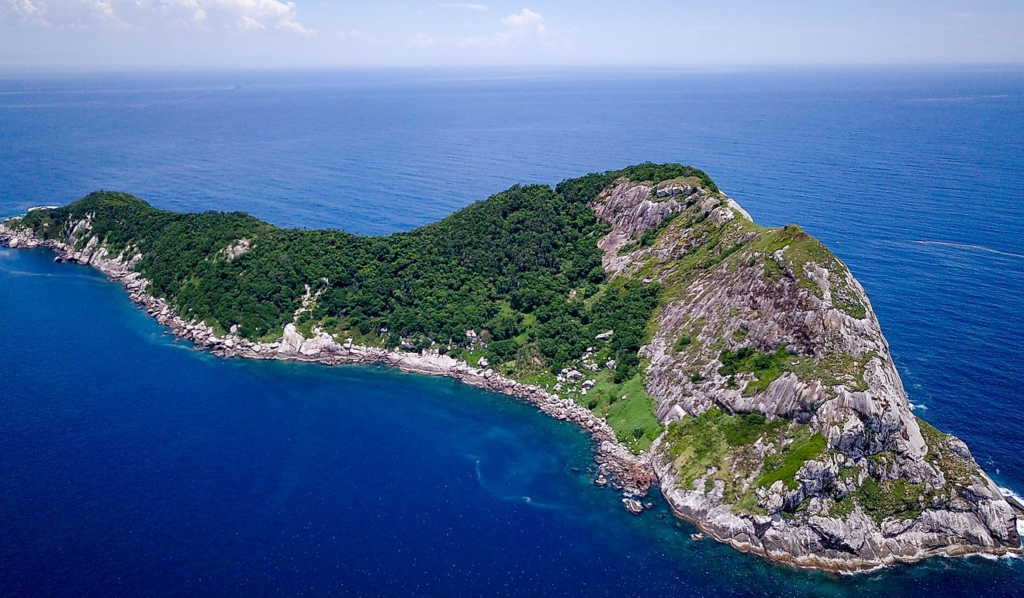
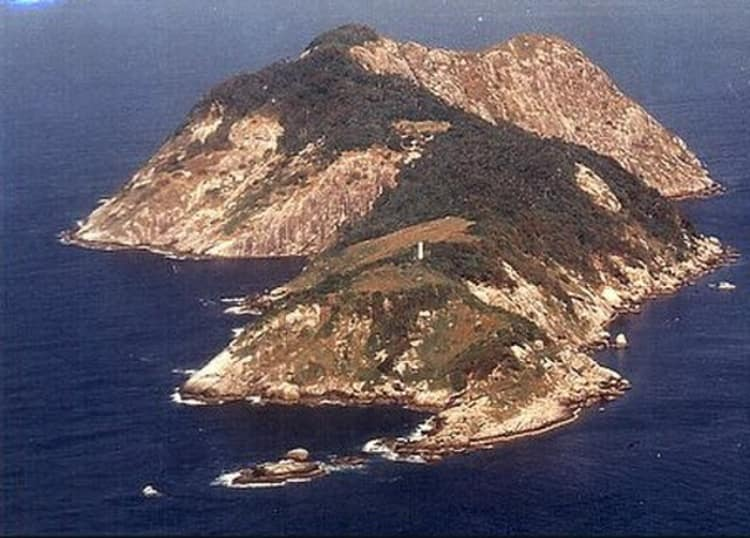
Ilha da Queimada Grande is located in the Atlantic Ocean, roughly 33 kilometers (20 miles) off the coast of São Paulo, Brazil. From the mainland, it looks deceptively peaceful—lush greenery surrounded by blue water.
That appearance is dangerously misleading.
The Brazilian government strictly bans public access to the island. Only a handful of people are ever allowed to set foot there, including:
- Approved scientific researchers
- Conservation biologists
- Brazilian Navy personnel
Unauthorized entry is illegal and punishable by fines and arrest.
This level of restriction alone has fueled worldwide curiosity—and fear.
Why Is Snake Island Considered the Most Dangerous Island on Earth?
A Lethal Concentration of Venomous Snakes
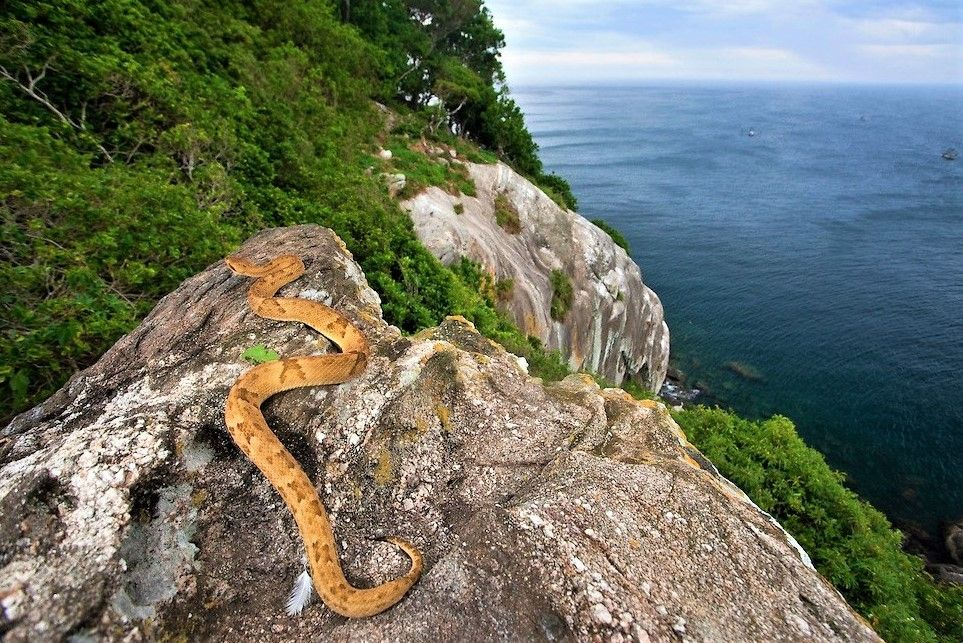
Snake Island is home to the golden lancehead viper (Bothrops insularis)—one of the most venomous snakes known to science.
What makes this island uniquely dangerous isn’t just the species—it’s the density.
Scientific surveys estimate:
- Thousands of venomous snakes on less than half a square kilometer
- In some areas, one snake per square meter
- Venom up to five times more potent than related mainland species
A single untreated bite can result in massive tissue damage, internal bleeding, and death within hours.
And there is no hospital.
No road.
No emergency evacuation.
How Did the Island Become So Deadly?
Thousands of years ago, rising sea levels isolated Queimada Grande from mainland Brazil. Animals trapped on the island had to adapt—or die.
With no mammals to hunt, snakes evolved to prey almost exclusively on migratory birds. To prevent prey from escaping mid-flight, their venom became faster-acting and far more powerful.
In evolutionary terms, it worked perfectly.
In human terms, it made the island uninhabitable.
Real Deaths and Dark History: Fact vs Legend
The Lighthouse Tragedy
In the early 1900s, a lighthouse keeper and his family were stationed on the island. According to naval accounts and local oral history:
- Snakes entered the lighthouse through open windows
- The keeper and his family were later found dead
After this incident, the lighthouse was automated and permanently abandoned.
While some details may be exaggerated over time, Brazilian naval records confirm the lighthouse was evacuated due to extreme danger.
Fishermen Stories That Refuse to Die
Local fishermen tell chilling stories:
- Boats drifting back without crews
- Men bitten while briefly landing for supplies
- Sudden disappearances near the island
Not every story is officially verified—but Brazil’s strict prohibition exists for a reason.
Why Do Visitors Say the Island Feels Haunted?
Danger alone doesn’t explain Snake Island’s reputation.
Researchers who’ve approached or briefly landed describe:
- Intense feelings of dread
- An unnatural silence, broken only by movement in the brush
- The sensation of being watched constantly
Psychologists explain that environments with constant mortal threat trigger primal fear responses. When the brain is in survival mode, perception changes.
Fear becomes hyper-awareness.
Hyper-awareness becomes imagination.
And imagination, in a place like this, feels supernatural.
Is Snake Island Actually Haunted—or Just Psychologically Terrifying?
There is no scientific evidence of ghosts, curses, or paranormal activity.
However, Snake Island contains all the elements that create a haunted reputation:
- Total isolation
- Abandoned structures
- Dense jungle with limited visibility
- Constant movement beneath foliage
- Knowledge that a single mistake could be fatal
The human mind fills in the gaps.
The island doesn’t need ghosts.
It creates fear naturally.
Why Are Americans So Fascinated by This Island?
Search trends show growing interest in:
- Forbidden places
- Haunted locations with real danger
- Extreme environments humans can’t control
For American audiences, Snake Island represents something rare:
A place humans cannot conquer.
In a world of satellites, smartphones, and instant access, the idea of a place that is off-limits by necessity is deeply compelling.
Can Anyone Legally Visit Snake Island?
The answer is simple: No.
Tourism is strictly prohibited.
Only authorized research teams are permitted, and even they:
- Wear protective gear
- Travel with medical evacuation plans
- Limit time spent on land
For everyone else, Snake Island is meant to be observed from a distance—and respected.
How Does Snake Island Compare to Other “Dangerous” Islands?
Some islands are dangerous because of:
- Volcanic eruptions
- Hostile wildlife
- Disease
Snake Island is different.
Here, the danger is:
- Constant
- Unavoidable
- Invisible until it’s too late
There are no safe zones.
No marked trails.
No escape routes.
That’s why it stands apart.
Why Scientists Still Study This Island
Despite its terrifying reputation, Snake Island is incredibly important scientifically.
Researchers study:
- Venom composition for medical research
- Rapid evolution in isolated ecosystems
- Conservation of endangered species
Ironically, the same snakes that make the island deadly may help develop life-saving medicines in the future.
Practical Advice: Should You Ever Try to Go Near It?
What Experts Say You Should Never Do
- Attempt illegal landings
- Believe myths minimizing the danger
- Approach without authorization
What You Can Do Instead
- Learn through documentaries and research
- Visit mainland museums and exhibits
- Respect conservation laws
Snake Island is not an adventure destination.
It is a scientific and ecological boundary.
Final Reflection: Is This Truly the World’s Most Dangerous Island?
If danger is defined as:
- Immediate
- Inescapable
- Lethal
Then Snake Island makes a strong case.
It doesn’t threaten through legend or exaggeration.
It threatens simply by existing.
And that may be why the stories never stop.
Some places remind us that humans are not always in control.
Frequently Asked Questions (Trending Searches)
1. What is the world’s most dangerous island?
Ans. Ilha da Queimada Grande, also known as Snake Island, is widely considered the most dangerous due to its extreme concentration of venomous snakes.
2. Why is Snake Island illegal to visit?
Ans. The Brazilian government bans public access because of the high risk of fatal snake bites and lack of emergency medical care.
3. How many snakes live on Snake Island?
Ans. Scientists estimate thousands of golden lancehead vipers inhabit the island.
4. Are the snakes really that deadly?
Ans. Yes. Their venom can cause rapid tissue damage and death without immediate treatment.
5. Has anyone actually died on Snake Island?
Ans. Historical accounts suggest multiple deaths, including a lighthouse keeper’s family.
6. Is Snake Island truly haunted?
Ans. There is no scientific evidence of hauntings, but extreme conditions create intense fear responses.
7. Can tourists visit Snake Island legally?
Ans. No. Tourism is strictly prohibited.
8. Why don’t the snakes leave the island?
Ans. They evolved in isolation and are uniquely adapted to the island’s ecosystem.
9. What is the golden lancehead viper?
Ans. It is a highly venomous, endangered snake species found only on Snake Island.
10. Will Snake Island ever open to the public?
Ans. Very unlikely, due to safety risks and conservation concerns.
Final Takeaway
Snake Island isn’t dangerous because of myths.
It’s dangerous because nature won.
In a world increasingly shaped by human control, it stands as a reminder that some places remain untamed—and should stay that way.